

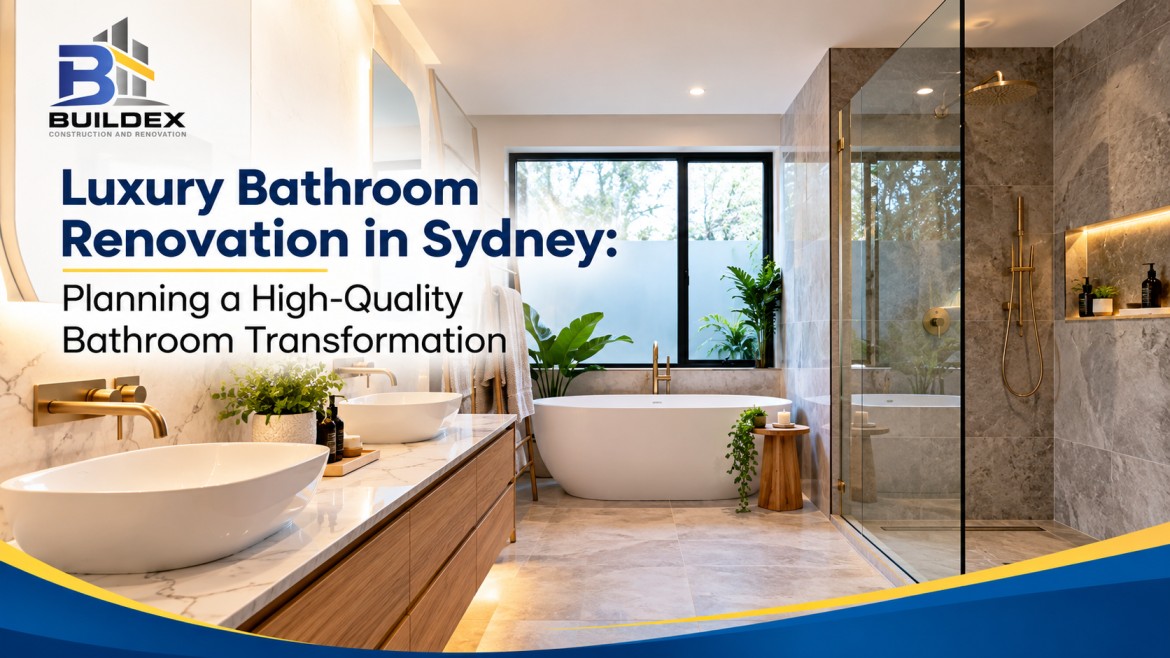
A luxury bathroom is not defined by expensive-looking tiles or a large freestanding bathtub alone. It is the result of thoughtful planning, quality workmanship, effective waterproofing, practical storage, and a design that makes everyday routines more comfortable. In Sydney homes, where bathroom sizes, building styles and household needs vary considerably, achieving this balance requires careful decisions before renovation work begins.
Choosing the right luxury bathroom renovation services means looking beyond surface finishes. Homeowners need to consider how the bathroom will be used, how water will drain, whether ventilation is adequate, how lighting will function, and which materials will remain practical over time.
The best luxury bathroom renovation ideas combine visual appeal with long-term performance. A well-designed ensuite might feature a walk-in shower, concealed storage and layered lighting, while a compact family bathroom could benefit more from a frameless shower screen, wall-hung vanity and carefully positioned mirrors.
This guide explains how to plan a high-quality bathroom transformation in Sydney, from selecting a design direction to coordinating trades and avoiding common renovation mistakes. Whether you are updating an ageing bathroom, modernising an ensuite or planning a complete interior transformation, the following advice will help you make informed decisions.
A successful bathroom must perform reliably in a demanding environment. It experiences daily moisture, temperature changes, cleaning products and constant use, so every design decision needs to account for both aesthetics and functionality.
Luxury is often found in the details that make a bathroom easier to use:
For example, a couple renovating an older ensuite may initially focus on marble-look tiles and premium tapware. However, if the existing room has poor ventilation, insufficient storage and an awkward shower entrance, changing the finishes alone will not resolve its main problems.
A better approach is to identify these functional issues first and then select materials and fixtures that support the intended design.
This is where experienced bathroom renovation services Sydney homeowners consider can make a meaningful difference. Proper planning connects the design concept with plumbing, electrical work, waterproofing, ventilation, and installation requirements.
The planning stage establishes the foundation for the entire project. Before choosing tiles or bathroom accessories, determine what needs to change and what should remain.
Start by examining how the current room performs.
Ask the following questions:
These questions help distinguish cosmetic improvements from work that may require more substantial repairs.
A bathroom with attractive tiles but persistent dampness needs a different renovation strategy from a structurally sound bathroom that simply looks dated.
If moisture damage is suspected, investigate the underlying cause before covering affected surfaces with new finishes. Otherwise, the renovation may conceal a problem rather than solve it.
Create a list of essential features and optional upgrades. This helps prevent design decisions from becoming disconnected from the way your household actually uses the room.
Essential priorities might include a larger shower, improved ventilation, accessible storage, or easier cleaning. Optional features could include a freestanding bath, feature lighting or a decorative niche.
Consider the needs of every regular user. A family bathroom may require a durable vanity and accessible storage, while a guest bathroom might benefit from a simple, uncluttered layout.
Keeping plumbing fixtures close to their existing positions can simplify coordination, although the final decision depends on the condition of the plumbing and the proposed design.
Moving a toilet, shower or vanity may affect drainage gradients, pipe routes, floor construction and access for future maintenance.
Before committing to a new arrangement, have the relevant trades assess whether the proposed layout is practical. A visually appealing plan is only useful when it can be installed safely and perform as intended.
Choose the main tiles, vanity, tapware, shower screen, mirrors and sanitary fixtures early enough to confirm their dimensions and installation requirements.
This is particularly important when using large-format tiles, wall-mounted fixtures or concealed plumbing systems. These products can influence wall preparation, waterproofing details and the positioning of pipes and electrical connections.
Keeping a documented schedule of selected products also helps everyone involved work from the same specifications.
A well-planned bathroom design balances proportion, lighting, material selection, storage, and ease of maintenance. The aim is to create a space that feels refined without becoming difficult to clean or inconvenient to use.
Luxury bathrooms often look more cohesive when a limited number of materials work together.
Consider combinations such as:
Porcelain tiles can be a practical option because many products offer low water absorption and a broad range of finishes. Natural stone can provide distinctive patterns, but its suitability depends on the stone type, finish, sealing requirements, and cleaning routine.
Always check the manufacturer’s technical guidance before selecting a surface for wet areas. A tile that looks beautiful on a showroom wall may not provide appropriate slip resistance for a shower floor.
Bathroom lighting should support several different activities rather than relying on a single ceiling light.
A layered lighting plan can include:
Mirror lighting deserves particular attention. Light positioned on both sides of a mirror, or a well-designed illuminated mirror, can reduce harsh facial shadows.
All electrical work must comply with applicable Australian requirements for bathroom locations, equipment and protection. Have a qualified electrician determine suitable fittings and their permitted installation positions.
A freestanding bath can become a striking feature in a spacious bathroom, but it should not compromise access, cleaning or shower space.
Likewise, a wall-hung vanity creates a lighter visual appearance and can make floor cleaning easier. However, its supporting structure, plumbing connections, and installation clearances need to be planned properly.
Before choosing fixtures, check their actual dimensions, water connections, maintenance access, and compatibility with the room.
A modern bathroom transformation Sydney homeowners can enjoy for years should reflect the property’s architecture and the needs of its occupants, rather than simply copying a current design trend.
Sydney properties include apartments, contemporary houses, older terraces and family homes with very different spatial constraints. A design that works beautifully in a large ensuite may not suit a narrow apartment bathroom.
Modern bathrooms often use simple geometric forms, concealed storage and consistent finishes.
A floating vanity, recessed shower niche and frameless glass screen can make the room appear more open. The effect is especially useful when visual clutter currently makes the bathroom feel smaller.
However, frameless glass requires regular cleaning, and recessed niches must be incorporated into the waterproofing system correctly. These details should be addressed during design development rather than improvised during installation.
Timber-look cabinetry, stone-inspired surfaces and brushed metal finishes can soften the appearance of a contemporary bathroom.
For instance, a neutral ensuite might use pale porcelain wall tiles, a timber-look vanity, a large mirror and brushed nickel fittings. The result can feel sophisticated without relying on multiple competing feature materials.
Natural timber used in a bathroom requires particular care. Select products specifically suitable for the intended environment and follow the manufacturer’s installation and maintenance instructions.
Trends can be useful sources of inspiration, but permanent finishes should be chosen with longevity in mind.
Consider keeping large surfaces relatively neutral and introducing stronger colours through replaceable accessories, towels or decorative objects. This approach makes it easier to refresh the room without undertaking another major renovation.
A practical modern design should still feel appropriate when current social media trends change.
A beautiful bathroom can become a serious maintenance problem if moisture protection is inadequate. Waterproofing is one of the most important technical elements of any renovation involving wet areas.
Waterproof bathroom renovation Sydney projects should account for the existing substrate, floor and wall junctions, shower configuration, drainage, penetrations and the waterproofing system specified for the installation.
Waterproofing is not simply a coating applied to a floor. It is a coordinated system designed to manage water exposure and protect vulnerable building elements.
The exact requirements depend on the bathroom layout and applicable standards, but common areas requiring careful detailing include:
Poorly sealed penetrations, inadequate preparation or incompatible products can undermine an otherwise well-installed system.
The substrate must be suitably prepared, and the specified waterproofing system must be installed in accordance with its technical instructions and applicable requirements.
A sensible quality-control process includes:
Waterproofing requirements in Australia are governed by applicable building regulations and standards, including the relevant provisions of the National Construction Code and AS 3740. The specific requirements depend on the project and the regulations in force.
Do not assume that attractive new tiles guarantee a waterproof bathroom. The concealed work matters just as much as the visible finish.
Watch for recurring dampness outside the shower, water appearing in adjacent rooms, loose tiles, deteriorating grout or persistent moisture around fixtures.
These symptoms do not automatically prove waterproofing failure. Plumbing leaks, condensation and other building defects can produce similar signs.
A qualified professional should investigate the source before repairs begin. Applying fresh grout or sealant without identifying the cause may provide only temporary relief.
A small bathroom renovation Sydney homeowners undertake can deliver excellent results when every centimetre is planned carefully. Limited floor area does not prevent a bathroom from feeling comfortable, polished and well organised.
The key is to improve movement, storage and visual continuity rather than attempting to fit every luxury feature into a small room.
Consider these practical options:
A wall-hung toilet may also create a cleaner visual appearance, but its concealed cistern, supporting frame and maintenance access must be considered.
Large-format tiles can reduce the number of visible grout lines, although the tile size must suit the room’s geometry and drainage requirements.
Using related tones across walls and floors can create visual continuity. Good lighting and a generously proportioned mirror can also make a compact room feel more open.
Avoid selecting oversized fixtures simply because they appear luxurious in a showroom. A large vanity or deep freestanding bath can restrict movement and make everyday use frustrating.
Think about what must remain within easy reach: toiletries, towels, cleaning products, hair tools and daily skincare items.
For example, a household sharing one bathroom may need separate drawers and accessible towel storage more than it needs decorative open shelving.
The most successful compact bathrooms often feel luxurious because everything has a place and the available space is easy to navigate.
Searching for bathroom remodel contractors near me can produce a wide range of businesses, but location alone is not enough to establish whether a contractor is suitable for a luxury renovation.
The right professional should understand design coordination, wet-area construction, relevant compliance obligations and the practical details that influence the finished result.
Before engaging a contractor, verify the following:
A polished portfolio is useful, but it should not replace verification of qualifications, references and project documentation.
Ask prospective contractors questions such as:
Clear answers help you understand the contractor’s working process before your home becomes a construction site.
Compare proposals against the same written scope and design specification. One proposal may include preparation, waterproofing documentation, and complete installation, while another may exclude important components.
Look beyond the final presentation and examine the detail of the work being offered.
The objective is to select a qualified professional who can deliver the intended design while managing construction quality, compliance and communication.
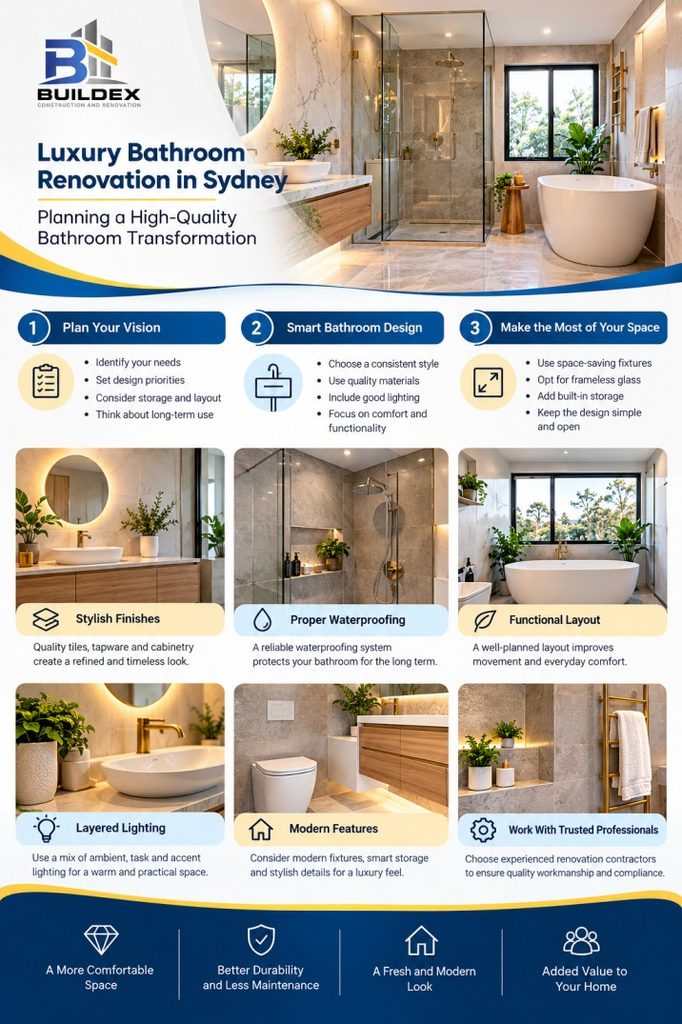
Even a carefully planned renovation can disappoint when important construction details are overlooked. Understanding common mistakes helps homeowners make better decisions before work starts.
A dramatic feature wall or sculptural basin may look impressive, but neither compensates for poor storage, awkward access or inadequate lighting.
Practical advice: Test the proposed layout on paper. Check door swings, shower entry clearance, vanity access and the distance between fixtures before approving the final plan.
Bathrooms generate substantial moisture, particularly during showers. Inadequate ventilation can contribute to condensation, mould growth and deterioration of finishes.
Choose an appropriate exhaust system based on the room, ducting arrangement and applicable requirements. Where practical, ensure the exhaust discharges to an appropriate external location rather than into an enclosed roof space. Follow applicable ventilation rules and manufacturer instructions.
A polished tile can be slippery when wet, while a heavily textured surface may be difficult to clean.
Ask about slip resistance, water absorption, cleaning requirements and suitability for the intended application. The appropriate product for a shower floor may differ from the best choice for a decorative wall.
Moving a vanity or changing a shower configuration after plumbing, electrical and waterproofing work has started can create additional coordination problems.
Finalise key dimensions, fixture specifications and service locations before construction reaches those stages. If a change becomes necessary, have the relevant professionals assess its implications before work continues.
Grout and silicone sealant serve important functions, but they should not be treated as substitutes for a correctly installed waterproofing system.
Maintain these materials according to the manufacturer’s instructions, and investigate recurring moisture rather than repeatedly sealing the same area.
Concealed plumbing, complex shower fittings and unusual finishes may require more specialised maintenance than expected.
Before selecting them, establish how components can be accessed, which replacement parts are available and what cleaning methods are recommended.
The following practices help connect the design concept with the realities of construction and everyday use.
Record the selected products and installation requirements in one document. Include:
This reduces uncertainty when different trades need to coordinate their work.
A walk-in shower can create a seamless appearance, but it requires careful coordination between floor levels, drainage, waterproofing and tile installation.
The available floor depth and existing building construction may limit which drainage arrangement is practical. Have the installer assess these constraints before committing to a particular design.
Photographs of plumbing connections, waterproofing details and other concealed components can help with future maintenance and troubleshooting.
Keep records alongside relevant inspection reports, product warranties and compliance documentation. Photographs do not replace required inspections or certificates, but they can provide useful supporting evidence. Buildex Construction provides reliable residential construction and renovation services, helping Sydney homeowners create functional, stylish, and high-quality living spaces tailored to their needs.
Select surfaces and fittings based on how they will perform after years of everyday use.
For example, hard-water deposits may be more visible on dark tapware and glass. Natural stone may require specific cleaners and periodic maintenance, while some textured surfaces can collect soap residue.
Ask suppliers for care instructions before purchasing materials, especially when combining different surface types.
Sydney homes can present different challenges depending on their age, construction and location. Apartments may have strata requirements and restrictions on plumbing changes, while older homes may contain concealed damage or outdated services.
Check whether development approval, a complying development pathway, strata consent or other approvals are relevant to your proposed work. Requirements depend on the property and the scope of the renovation.
Where the work affects structural elements, shared building services or other regulated components, obtain appropriate professional advice before construction begins.
Begin planning before selecting a construction start date. A well-organised project allows time for assessing the existing room, developing the layout, confirming materials, coordinating trades and resolving approval requirements.
A practical planning sequence is:
The overall duration will depend on the scope of work, material availability, the condition of the existing bathroom and any unexpected issues. Avoid committing to a fixed completion date before these factors have been assessed.
A successful luxury bathroom renovation starts with understanding how the space needs to function. Thoughtful planning, suitable materials, reliable waterproofing, effective ventilation and careful trade coordination all contribute to a bathroom that looks refined and performs well.
For Sydney homeowners, the most effective approach is to address technical requirements first, finalise the design before construction and verify the qualifications of the professionals carrying out the work.
Whether you are considering a contemporary ensuite, a family bathroom upgrade or a compact wet-area redesign, the right luxury bathroom renovation services should help translate your requirements into a practical, durable and visually cohesive result.
Take time to assess your existing bathroom, document your priorities and compare renovation proposals carefully. A considered approach will help you create a bathroom that supports everyday comfort rather than simply following the latest design trend.
Prioritise the layout, waterproofing, ventilation, plumbing and electrical requirements before focusing on decorative finishes. These elements affect how the bathroom performs and how easily it can be maintained.
Once the functional requirements are resolved, select tiles, tapware, cabinetry, mirrors and lighting that complement one another. This sequence helps prevent attractive design choices from creating practical or technical problems later.
Use space-efficient fixtures, a consistent colour palette, well-planned lighting and storage that keeps everyday items organised. A wall-hung vanity, large mirror and appropriately sized glass shower screen can help create a more open appearance.
Avoid overcrowding the room with oversized fixtures. Measure the available space carefully and check door clearances, shower access and storage capacity before confirming the layout.
Waterproofing helps protect the building fabric from moisture entering vulnerable areas around showers, floors, walls and plumbing penetrations. Incorrect installation can contribute to concealed water damage, deterioration of building materials and mould-related problems.
A suitable waterproofing system must be installed in accordance with the applicable requirements, product instructions, and project specifications. Required inspections and testing should be completed before the membrane is concealed by tiles or other finishes.
Start by checking the contractor’s relevant NSW licensing requirements, experience with comparable renovations, references and approach to quality control.
Request a detailed written scope covering preparation, waterproofing, plumbing, electrical work, tiling, fixtures and finishing. Ask who supervises the project and how variations, defects and concealed problems will be managed.
When comparingbathroom remodel contractors near me, evaluate the proposed work and documented qualifications rather than relying solely on photographs or online reviews.
Timeless materials, practical storage, effective ventilation, layered lighting and quality fixtures are useful starting points. Neutral porcelain tiles, a well-designed vanity and durable tapware can provide a sophisticated foundation without depending on short-lived trends.
Choose products that suit your cleaning routine and household needs. For example, a busy family may benefit more from durable surfaces and generous storage than from delicate finishes requiring frequent maintenance.
The most effective luxury bathroom renovation ideas improve comfort and usability while making the bathroom easier to maintain over time.