

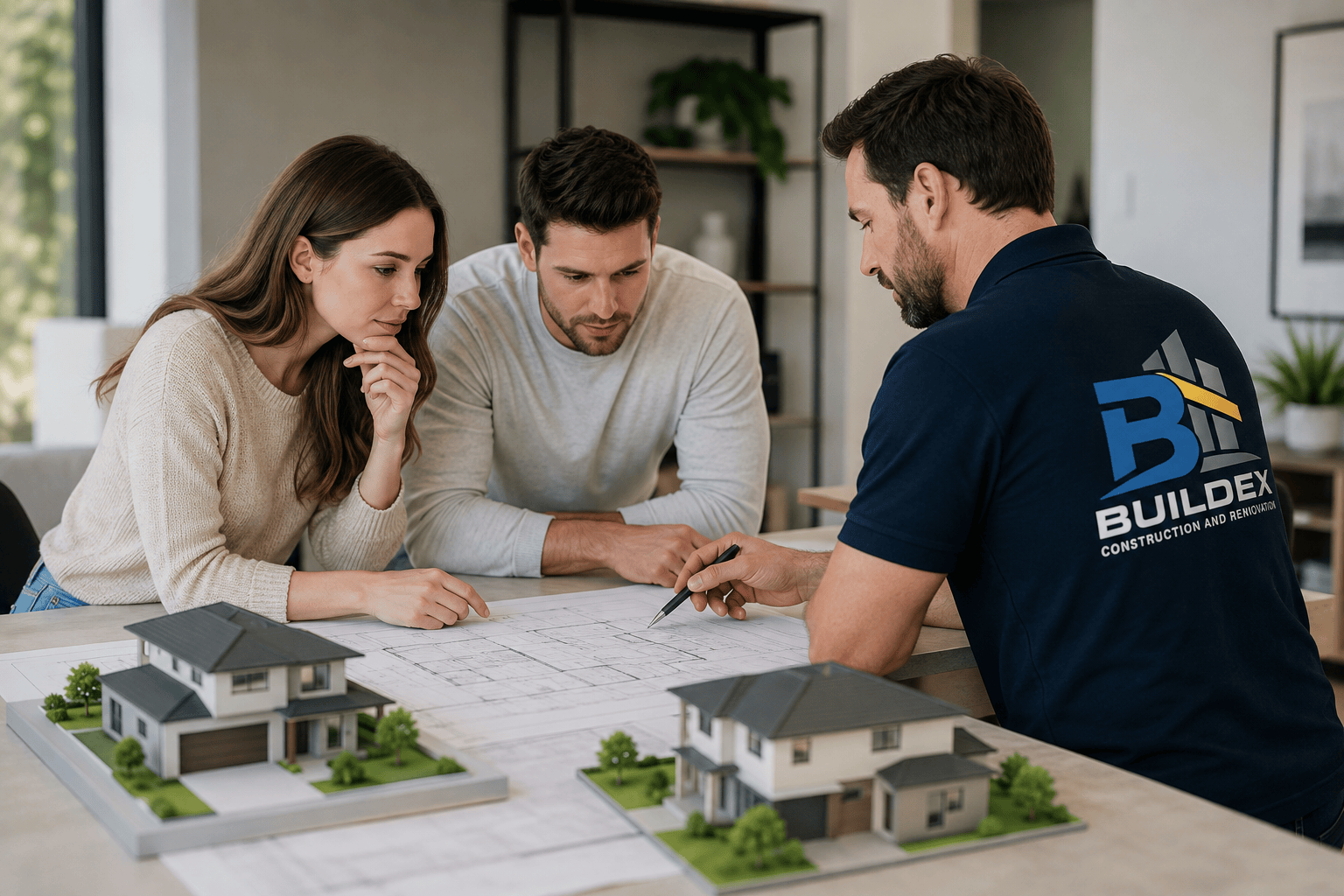
Sydney property owners are increasingly looking beyond the traditional single dwelling when considering how to improve land value, rental income, and long-term investment potential. One option attracting attention is developing a duplex, particularly where a suitable block, planning controls, and market demand make dual living viable.
But is a duplex always a better investment than a conventional house?
The answer is no. The right choice depends on land size and configuration, planning requirements, construction costs, finance, expected rental returns, resale demand, and your investment timeframe. Understanding the duplex vs house investment in Sydney decision requires looking beyond the number of bedrooms or the potential rental income.
For some owners, retaining a single house may offer simplicity and lower development risk. For others, a well-designed duplex can create two separate dwellings from one site, potentially providing additional rental income, flexibility, or an opportunity to sell one dwelling while retaining the other.
This guide explains the key factors property owners should assess before choosing between these two strategies.
A property investment decision should start with the land and the owner’s objectives rather than with the assumption that one development model is automatically more profitable.
A conventional house generally involves one dwelling on the site. A duplex involves two dwellings, usually designed to operate independently while sharing the same overall development site.
That difference can affect:
For example, imagine an owner has a suitable Sydney block with enough frontage, access, and usable land for two dwellings. Keeping the existing house may provide relatively straightforward rental income. Developing a duplex could potentially produce two rental properties, two saleable dwellings, or a combination of owner-occupation and investment.
However, the duplex option also introduces additional costs and complexity.
This is why comparing duplex vs house investment Sydney should be treated as a feasibility exercise rather than a simple question of which property type has the higher market value.
A house investment is comparatively straightforward: acquire or retain a property, maintain the dwelling, lease it if appropriate, and benefit from rental income and potential capital growth.
A duplex changes the equation because the owner is effectively undertaking a small-scale development project.
The project may involve:
The financial outcome therefore depends not only on the final property value but also on how efficiently the development is planned and delivered.
Choosing experienced duplex builders is important, but builder selection should not be the first step.
Before committing to a design or construction contract, property owners should establish whether the site actually supports the intended development.
A feasibility assessment should consider factors such as:
Block width and depth can significantly influence duplex design.
A narrow site may make side-by-side dwellings difficult to design efficiently, while a wider block could provide better access and more practical floor plans.
Vehicle access is often a critical consideration.
Driveways, garages, turning areas, pedestrian access, and separation between dwellings all need to work together without consuming excessive usable space.
Local planning requirements can influence whether a proposed development is possible and what form it can take.
Owners should have the site assessed against the applicable planning framework rather than relying on assumptions based on neighbouring properties.
If an existing house occupies the block, demolition costs and site constraints need to be incorporated into the feasibility calculation.
Sloping land can significantly affect excavation, retaining walls, drainage, foundations, and construction costs.
A flat block may offer a simpler construction pathway, while a difficult site may require additional engineering and civil works.
A duplex should be assessed as a property development rather than simply a larger house.
The central question is not:
“Can I build two homes?”
The better question is:
“Will developing two homes create enough additional value to justify the additional costs, risk, time, and management involved?”
A basic feasibility model should consider:
The final numbers should be reviewed with appropriately qualified financial, tax, planning, and property professionals.
For investors specifically considering a duplex investment property in Sydney, rental income is one of the most obvious attractions.
Two dwellings can potentially provide two rental streams instead of one.
For example, consider a hypothetical site where a completed duplex could contain two three-bedroom dwellings.
Instead of receiving rent from one house, the owner may have two leases. This can improve gross rental income and diversify vacancy exposure.
However, two properties also mean two tenancy relationships and potentially:
There is also no guarantee that two dwellings will produce a superior net return after development and financing costs.
The important metric is therefore net investment performance, not simply gross weekly rent.
The concept of dual occupancy can appeal to different types of property owners.
An investor may want two independent rental properties.
A family may want one dwelling for themselves and another for relatives.
An owner may want to live in one dwelling and rent the other.
A developer may construct both dwellings for sale.
This flexibility is one of the major reasons dual occupancy developments attract attention.
However, the exact development pathway, permissible design, subdivision arrangements, and approval requirements depend on the specific site and applicable NSW and local planning rules.
Property owners should therefore obtain site-specific advice rather than relying on general examples found online.
Understanding the duplex development process Sydney can help owners avoid unrealistic expectations about time, cost, and complexity.
The first stage is determining whether the property is suitable for the intended development.
This typically involves reviewing site dimensions, planning controls, access, services, existing structures, and physical constraints.
Once the site’s potential is understood, the owner can compare estimated development costs with likely completed values or rental returns.
At this stage, conservative assumptions are preferable.
A project that only works financially under optimistic construction costs and maximum resale values deserves closer scrutiny.
A preliminary design can explore dwelling configuration, bedrooms, living areas, parking, landscaping, private open space, access, and overall site efficiency.
Good design is not simply about maximising floor area.
The objective is to create dwellings that are practical, attractive, compliant, and appropriate for the target market.
The required approval pathway depends on the development and applicable regulations.
This is an area where professional advice matters because planning requirements can change according to location, development type, site characteristics, and proposed configuration.
Once the project progresses, architectural, engineering, energy, surveying, and other technical documentation may be required.
Construction introduces another layer of risk.
Weather, material availability, variations, site conditions, labour, and unforeseen works can affect the budget and schedule.
After construction, the owner must decide how the completed properties will be used.
Possible strategies include:
This flexibility can be valuable, but it should be considered before construction begins.
Anyone researching how to build a duplex in Sydney should understand that construction is only one part of the investment equation.
A common mistake is focusing heavily on the builder’s construction price while overlooking the full development budget.
For example, an owner may receive a construction quotation that appears attractive but later discover that the overall project also requires substantial expenditure on design, engineering, demolition, approvals, site works, landscaping, connections, financing, and other project costs.
A more reliable approach is to create a complete development budget before making a major commitment.
Unexpected costs can occur even after detailed planning.
Ground conditions may differ from expectations. Existing services may create complications. Material selections may change. Council or consultant requirements may affect the design.
A contingency helps absorb some of these uncertainties.
A larger or more expensive duplex is not automatically a better investment.
If the local market strongly favours practical three-bedroom homes, spending heavily to create oversized luxury dwellings may not generate an equivalent increase in rental income or resale value.
The finished product should match the market.
When comparing duplex investment property builders, look beyond a headline construction price.
Relevant questions include:
Previous duplex experience can be particularly useful because duplex construction requires coordination across two dwellings, shared site infrastructure, access arrangements, services, and other considerations.
The cheapest quotation is not necessarily the lowest-cost option once variations and exclusions are considered.
When researching dual occupancy builders Sydney, property owners should also assess the quality of the proposed design.
Two dwellings can technically fit on a site while still producing a poor investment.
A successful duplex should consider:
These factors influence how tenants and future buyers perceive the property.
A well-designed smaller dwelling can outperform a larger but poorly planned one because usability and market appeal matter.
There is no universal answer.
A house may have strong appeal to families seeking larger yards, privacy, and established neighbourhood environments.
A duplex can appeal to tenants who want modern accommodation with less maintenance than a traditional standalone property.
Location is particularly important.
A duplex in an area with strong demand for family-sized rental accommodation may perform differently from a duplex in an area dominated by apartment renters or owner-occupiers.
Before deciding, research:
Do not base the feasibility entirely on advertised rents or asking prices. Actual market evidence provides a stronger foundation.
The potential benefits of a duplex come with additional risks.
Unexpected cost increases can reduce development margins.
Planning or approval complications can extend the holding period and increase finance costs.
A site may technically permit development but still be commercially unattractive because of access, slope, drainage, orientation, or other constraints.
Property prices and rents can change between project commencement and completion.
Assuming the highest possible sale price while using the lowest possible construction cost can make a project appear more profitable than it really is.
Development costs are paid progressively, while the final investment value or sale proceeds may not be realised until much later.
This makes finance and cash-flow planning particularly important.
Land size alone does not determine development potential.
Shape, frontage, access, planning controls, services, setbacks, topography, and other factors matter.
A $50,000 difference in a builder quotation should not automatically determine the decision.
The owner should compare the complete project cost and understand exactly what each quotation includes.
A development should be designed for a market.
Before finalising the design, determine who is likely to rent or purchase the completed dwellings.
Longer projects can create additional interest, rates, insurance, and other holding expenses.
Additional floor area can increase construction costs without producing an equivalent increase in market value.
Before proceeding, ask the following:
What is my investment objective?
Are you seeking rental income, capital growth, development profit, family accommodation, or a combination?
What is the realistic total project cost?
Include professional fees, approvals, construction, site works, finance, holding costs, and contingency.
What happens if the project costs more than expected?
Stress-test the feasibility rather than assuming everything will proceed according to the original budget.
What happens if property values fall before completion?
Understand your financial exposure under a less favourable market scenario.
Would I still be comfortable owning the completed properties if I cannot sell immediately?
This question is particularly important for investors relying on an immediate sale to repay development finance.
Experienced property owners tend to approach duplex development conservatively.
Do not fall in love with a design before establishing whether the block supports it.
Use realistic construction costs and avoid assuming maximum resale values.
Planning, legal, tax, finance, valuation, and construction decisions can have different implications. The appropriate qualified professionals should review the relevant parts of the project.
Ask what the property will look like to a tenant or buyer several years after completion.
Development projects can encounter unexpected expenses. Maintaining an adequate financial buffer can reduce pressure when circumstances change.
Consider two hypothetical property owners.
Owner A has a well-located block with favourable dimensions and strong demand for modern family rentals. The existing house generates reasonable rent, but a feasibility assessment indicates that two appropriately designed dwellings could generate significantly higher combined rental income.
Owner A may find that a duplex strategy makes sense if the additional income and potential capital value justify the development cost and risk.
Owner B owns a site with difficult access, significant slope, expensive retaining requirements, and uncertain development economics.
Although the site may technically accommodate a duplex, the additional construction and civil costs could consume much of the potential value uplift.
For Owner B, retaining or improving the existing house may be the more sensible investment strategy.
The lesson is simple: the best option is property-specific.
The duplex vs house investment in Sydney decision is ultimately about balancing opportunity against complexity.
A duplex can make excellent use of suitable land and potentially provide two income-producing or saleable dwellings. It may also create greater flexibility for families and investors. But these advantages only matter when the development is financially viable, appropriately designed, and suited to the local market.
A house, meanwhile, can offer simplicity, established market appeal, and fewer development variables.
For property owners considering duplex vs house investment Sydney, the strongest starting point is a realistic site assessment followed by a conservative feasibility study. Understand the planning pathway, calculate the complete project cost, research actual local market evidence, and consider what could happen if costs increase or market conditions change.
The goal should not simply be to fit two dwellings onto one block. The goal is to create a development that makes commercial sense, works for its future occupants, and remains financially resilient from acquisition through to completion.
Not automatically. A duplex can provide two income streams and potentially greater land utilisation, but it also involves additional development costs, planning requirements, construction risks, and management responsibilities. A conventional house may offer a simpler investment with lower development complexity. The better option depends on the site’s characteristics, market demand, investment strategy, and financial feasibility.
Start with site feasibility. Review the site’s dimensions, frontage, access, slope, services, planning controls, existing structures, and likely development pathway. Then prepare a complete financial model covering design, approvals, demolition, construction, site works, finance, holding costs, contingency, and expected completed value or rental income.
There is no single timeframe because each project is different. Site complexity, design changes, approval requirements, consultant availability, construction conditions, and builder scheduling can all affect the program. Owners should obtain a project-specific timeline rather than relying on a generic estimate.
It depends heavily on location and the quality of the completed development. A well-designed duplex can appeal to investors, families, downsizers, and owner-occupiers. However, buyer demand varies between Sydney suburbs, so owners should examine recent comparable sales and understand the local market before assuming that two dwellings will automatically be easier or harder to sell.
That depends on your investment objectives, financing, tax position, cash-flow requirements, and market conditions. Retaining both may provide ongoing rental income and exposure to long-term capital growth. Selling one may help recover development costs or reduce debt. Because tax and financial consequences can differ substantially between strategies, it is sensible to obtain appropriate professional advice before deciding.