

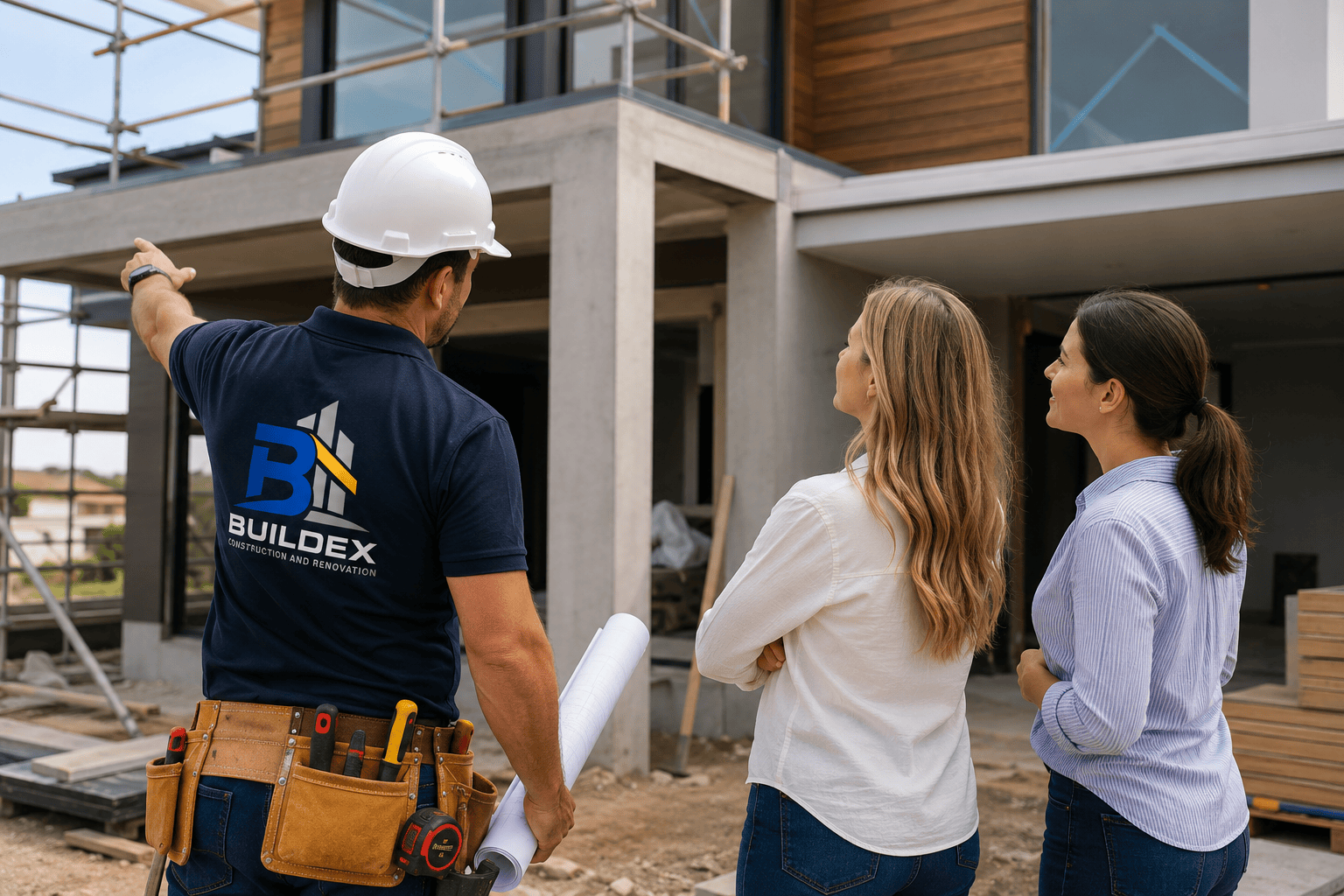
Building a home from the ground up is one of the biggest financial and personal decisions many people make. The difficult part isn’t just choosing the block, floor plan, or finishes. One of the most important decisions is choosing the right custom home builder in Sydney to turn your ideas into a finished property.
A builder can influence almost every part of the project, from design coordination and approvals to construction quality, communication, scheduling and budget management.
Sydney also presents its own construction challenges. Different suburbs can involve steep sites, narrow access, heritage considerations, bushfire requirements, flood considerations, planning controls and varying soil conditions. A builder who is experienced with one type of project may not necessarily be the best choice for another.
If you are considering modern custom home designs in Sydney, the right approach is to compare builders based on their experience, process, communication, contract structure and ability to manage the specific requirements of your site.
This guide explains how to choose the Right Builder in Sydney, what questions to ask, what documents to review, and what warning signs should make you think twice before signing a building contract.
The builder is not simply the person who constructs the walls and roof.
A professional home builder coordinates numerous moving parts, including:
A custom project may involve architects, building designers, engineers, surveyors, certifiers, suppliers and dozens of trades.
The builder needs to coordinate these parties while keeping the project moving.
For example, imagine that your architect specifies a particular window system. If the builder does not properly coordinate the window order with the construction program, installation can be delayed. That delay can affect internal finishing, waterproofing, and subsequent trades.
Good builders understand these dependencies before they become expensive problems.
Not every builder is suitable for every project.
A company experienced in small renovations may not have the systems required for a large new-build project. Likewise, a builder focused on volume housing may not be the best fit for a highly customised architectural home.
When comparing builders, look beyond the number of projects shown on a website.
Consider:
Ask whether the builder regularly completes projects similar to yours.
For example:
A builder with relevant project experience is more likely to understand the practical issues associated with your project.
Local knowledge can be valuable.
Sydney suburbs can have very different planning and construction conditions. A site in an established inner-city area may present completely different challenges from a new development on the city’s outskirts.
Ask the builder about previous projects in or around your area and whether they have dealt with similar site conditions.
When comparing a residential construction company Sydney, avoid making the decision based only on the initial price.
A lower preliminary estimate does not necessarily represent a lower final cost.
Compare the scope carefully.
Check whether the quotation includes:
Two builders can quote for apparently identical homes while making very different assumptions about what is included.
Allowances can create budget uncertainty.
For example, a quotation might include a modest allowance for bathroom fixtures while the homeowner has selected premium fittings during the design stage.
The final cost can then increase when the actual products are chosen.
A useful builder should explain allowances clearly rather than leaving the homeowner to discover them later.
A face-to-face meeting can reveal a great deal about how a builder operates.
Ask practical questions such as:
Who will manage my project?
Who will be my main contact during construction?
How often will I receive progress updates?
How are variations handled?
How are construction delays communicated?
Which subcontractors do you regularly use?
How do you manage quality control?
What happens if a defect is discovered?
Can I inspect completed projects?
Can you provide relevant references?
These questions are not designed to catch a builder out.
They help establish whether expectations are aligned before construction begins.
A custom home design consultation Sydney should be more than a discussion about how many bedrooms you want.
It is an opportunity to establish how the house needs to function.
Think about:
A good consultation should also consider the block.
The ideal house on a flat suburban site may not be the ideal design for a steep block.
Before becoming emotionally attached to a floor plan, understand the site.
Important factors can include:
A builder or design team should identify these considerations early because they can influence both design and cost.
Modern custom home designs Sydney are often associated with clean architectural lines, open-plan living, large windows and strong indoor-outdoor connections.
But good design is not simply about appearance.
A practical custom home should work for the people living in it.
For example, a large open-plan kitchen and living area may look impressive in drawings, but acoustics, storage, heating, cooling and furniture placement should also be considered.
Likewise, large areas of glazing can create excellent natural light but may require careful consideration of solar control, privacy and thermal performance.
The best custom designs balance:
This is where an experienced builder can provide useful construction input during the design stage.
Understanding the custom home building process Australia step by step can make the project feel much more manageable.
While every project differs, the general process often includes the following stages.
Start by establishing what you actually want from the home.
Create a basic list covering:
Separate your essential requirements from features that would be nice to have.
Understand the block before finalising the design.
Site conditions can influence excavation, foundations, drainage, retaining walls and structural requirements.
Work with the appropriate design professionals and builder to develop the concept.
At this stage, focus on layout, functionality, orientation and buildability rather than choosing every decorative finish.
Your budget should account for more than the construction price.
Allow for relevant professional fees, site-related expenses, approvals, finishes and potential contingencies.
A sensible contingency can help absorb genuinely unexpected costs.
The approval pathway depends on the project and site.
Your design and construction team should explain which approvals and certifications are relevant.
Before construction begins, clarify what is included.
Read the contract carefully and understand:
If you do not understand a contractual clause, obtain independent professional advice before signing.
The builder coordinates trades, materials, site activities and construction sequencing.
This is where project management becomes particularly important.
Construction should involve appropriate inspections and quality checks throughout the build rather than relying entirely on a final inspection.
At completion, outstanding items and defects should be identified and addressed according to the contract and applicable requirements.
Experience matters because construction problems are often solved through judgement rather than simply following a checklist.
An experienced builder may recognise early signs of:
For example, suppose excavation reveals unexpected ground conditions.
A builder with relevant experience may already have a process for obtaining engineering advice, reviewing the construction approach, and explaining the potential cost and schedule impact.
That does not mean an experienced builder can eliminate every unexpected issue.
It means the builder should have a structured way to respond when something unexpected occurs.
The term “luxury” should not simply mean expensive materials.
Luxury home builders Sydney often work on projects where greater attention is given to architectural detailing, bespoke finishes, integrated technology, complex structures, and high-quality materials.
These projects can require additional coordination.
Examples include:
When selecting a builder for a high-end project, ask to see completed homes with similar levels of detail.
A builder may be excellent at conventional construction but less experienced with highly customised architectural detailing.
Quality is difficult to judge from a glossy brochure.
Instead, look for evidence.
If possible, inspect homes completed several years ago.
A newly completed house can look excellent. A home that has been occupied for several years can tell you more about durability.
Look at:
Ask previous clients about the entire experience, not just the finished house.
Ask:
Was communication consistent?
Were variations explained clearly?
How were problems handled?
Was the site kept organised?
Did the builder respond after handover?
These answers can reveal how the builder operates when things do not go perfectly.
Price matters, but it should not be the only decision-making factor.
A quote that excludes important items may appear attractive initially and become more expensive later.
Late design changes can cause rework, delays, and additional costs.
Make major decisions as early as practical.
Do not sign a building contract without understanding its key terms.
References can reveal information that marketing material cannot.
Different professionals have different roles.
Understand who is responsible for design, certification, construction, inspections, and project administration.
It is easy to fall in love with premium finishes before understanding their cost implications.
Establish realistic allowances early.
A realistic budget is one of the most valuable tools in a custom build.
Start by dividing your budget into categories.
For example:
Construction
The core building works.
Professional Fees
Design, engineering, surveying and other relevant professional services.
Site Costs
Excavation, retaining, drainage and other site-specific requirements.
Selections
Kitchens, bathrooms, flooring, lighting, fixtures and finishes.
External Works
Driveways, landscaping, fencing and related works.
Contingency
A reserve for genuine unexpected costs.
This approach makes it easier to see where money is going.
It also reduces the temptation to treat the builder’s headline construction price as the entire project budget.
Communication is one of the most underestimated parts of a construction project.
A good builder should provide a clear process for:
You should know who to contact when a question arises.
Imagine that a supplier tells the builder a particular product will be delayed.
A builder who communicates early allows the homeowner to consider alternatives.
A builder who waits until installation day may leave everyone with fewer options.
Good communication therefore affects more than customer satisfaction.
It can directly influence project scheduling and decision-making.
Variations are changes to the agreed scope of work.
They can happen because the homeowner changes a selection, site conditions differ from expectations or design information changes.
The important issue is how variations are managed.
Before approving a variation, understand:
Avoid agreeing to verbal changes without appropriate written documentation.
A clear paper trail protects both the homeowner and builder.
When reviewing quotations, compare inclusions rather than headline prices.
Find out who supervises trades and how quality is checked.
Long-term workmanship can reveal more than photographs of freshly completed homes.
A realistic conversation early in the process is more useful than trying to hide your maximum budget.
If necessary, obtain independent legal or contractual advice.
Anyone can discuss the exciting parts of building a home.
Pay particular attention to how the builder discusses delays, defects, variations and unexpected site conditions.
Choosing a builder deserves the same level of care as choosing the design.
You will potentially work with this company for many months.
Choosing a custom home builder in Sydney should be based on evidence, not simply a polished website or the lowest initial quotation.
Look for relevant experience, transparent pricing, strong project management, clear communication and a demonstrated commitment to construction quality.
If you are planning modern custom home designs in Sydney, involve the right professionals early and make sure the design reflects both your lifestyle and the realities of the site.
Take time to compare builders properly. Visit completed projects. Speak with previous clients. Review inclusions and exclusions. Understand allowances and variations. Ask difficult questions before construction begins, not after a problem occurs.
The best builder for your project is not necessarily the biggest company or the cheapest option. It is the builder whose experience, systems, communication style and construction approach align with what you are trying to achieve.
A carefully selected builder can make the custom home building process in Australia step by step far easier to understand and manage, giving you a stronger foundation for making informed decisions throughout the project.
Ultimately, your goal should be simple: choose a builder who can demonstrate that they understand your home, your site, your budget and your expectations before construction starts.
Start by identifying builders with experience relevant to your project type, budget and site. Review completed projects, speak with previous clients and compare detailed quotations rather than headline prices. Ask how the builder manages variations, delays, subcontractors, quality control and communication. The right builder should be able to explain their construction process clearly and provide documentation that allows you to make an informed decision.
In many cases, involving the builder early can be useful because construction experience can influence design decisions. A builder may identify site constraints, construction complexities or cost implications before the design becomes too advanced. However, the appropriate design and contracting arrangement depends on the project, so homeowners should understand who is responsible for each stage before proceeding.
There is no reliable single price for every custom home because costs depend on factors such as site conditions, floor area, structural complexity, specifications, finishes, professional fees and external works. Rather than relying on a generic price per square metre, obtain a project-specific estimate and make sure you understand allowances, exclusions and potential site costs.
If your project involves complex architectural details, bespoke finishes, premium materials or unusual construction requirements, a builder with demonstrated experience in similar projects can be valuable. The important point is to assess experience rather than choosing a company simply because it uses the word “luxury” in its marketing.
Ask who will manage the project, what is included in the price, how variations are handled, what happens when delays occur, how quality is controlled, how communication works, and what happens during defect rectification. You should also understand payment stages, exclusions, allowances and the applicable contract terms. If anything is unclear, seek independent professional advice before signing.