

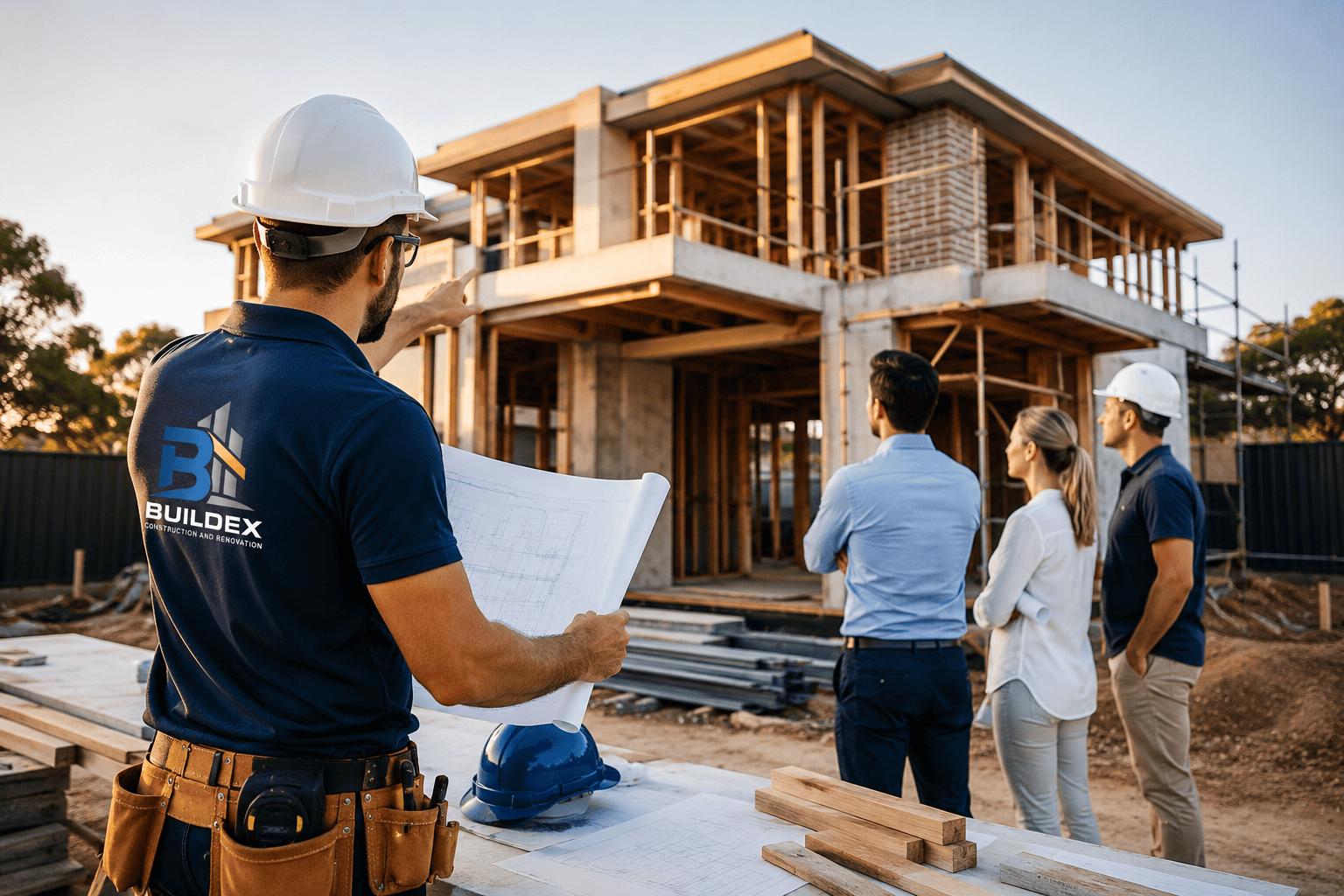
Building a custom home is one of the biggest decisions a homeowner can make. You are not simply choosing a floor plan and selecting finishes. You are committing to a design, construction process, budget, timeline and long-term living environment that may shape your family’s life for decades.
That is why choosing the right new home builders in Sydney for custom homes should happen well before construction begins.
Sydney’s housing market includes everything from compact urban homes and architect-designed residences to large family properties with highly customised layouts. With so many builders offering different packages, inclusions and construction approaches, comparing companies purely on the advertised price can be misleading.
A builder who appears cheaper initially may exclude important items, while a higher-priced proposal may include better specifications, more detailed documentation or allowances that reduce surprises later.
If you are wondering how do I choose a builder in Sydney, start by looking beyond the showroom. Investigate licensing, experience, contracts, inclusions, communication, construction quality, energy performance and how the builder manages variations.
This is particularly important if your goal is to work with Luxury Custom Home Builders Sydney for a highly personalised residence. Luxury does not simply mean expensive finishes. Good custom construction is about design coordination, structural quality, workmanship, functionality, durability and attention to detail.
A custom home involves many moving parts.
Architects or designers, engineers, certifiers, surveyors, tradespeople, suppliers and the builder all need to work from coordinated information. A mistake or omission early in the process can create delays or additional costs later.
For example, imagine a homeowner chooses a beautiful kitchen design but does not confirm the location of plumbing, electrical outlets, structural walls and appliance requirements before construction documentation is finalised.
Changing those elements during construction may be considerably more complicated than resolving them during the design stage.
An experienced builder should identify potential coordination issues early rather than waiting until construction is underway.
For residential building work over $20,000 in NSW, the contract must meet specific requirements, including details about the work, plans and specifications, contract price, progress payments, warranties and applicable Home Building Compensation cover.
That makes the builder selection process a practical risk-management decision, not simply a search for the lowest quote.
The first step is to establish what you actually expect from your builder.
Before requesting detailed proposals, consider:
The answers will help determine which builders are genuinely suitable.
A company experienced in volume project homes may not be the right fit for a highly individual architectural residence. Conversely, a premium custom builder may not be necessary for a straightforward new dwelling with a relatively standard design.
The right match matters.
When homeowners ask how do I choose a builder in Sydney, I recommend assessing candidates in several stages rather than making a decision after the first meeting.
Licensing should be one of your first checks.
NSW Government guidance states that the contractor licence should be checked before signing a building contract, and the licence details should correspond with the contractor named in the contract.
Do not rely only on a company’s website stating that it is licensed.
Verify the actual licence.
Also check whether the licence covers the type of work you are engaging the builder to perform.
For companies and partnerships, NSW requirements also provide that the company or partnership itself needs the relevant contractor licence and a nominated qualified supervisor.
Ask about projects similar to yours.
If you want a custom home with:
then ask whether the builder has successfully completed comparable projects.
The important word is comparable.
A builder may have constructed hundreds of homes, but that does not necessarily mean they have experience with the particular type of project you are planning.
Do not limit your research to online photographs.
Ask for information about completed projects where appropriate.
Useful questions include:
Photographs show the finished appearance.
They do not necessarily show how the project was managed.
A custom home that looks impressive in professional photography may still have experienced poor communication, budget surprises or unresolved defects.
Your objective is to understand the whole building experience.
A building contract should clearly establish what you are buying and how the project will be delivered.
For NSW residential building work over $20,000, the contract must contain specific information, including plans and specifications, contract price information, warranties, progress-payment provisions and applicable insurance information. Variations must also be documented appropriately.
Before signing, pay close attention to:
Never assume that something discussed verbally is automatically included.
If an important feature matters to you, make sure it is documented.
Consider two builders quoting for the same home.
Builder A quotes $900,000.
Builder B quotes $950,000.
At first glance, Builder A appears to offer better value.
But after comparing the inclusions, you discover that Builder A’s proposal excludes landscaping, higher-grade flooring, several electrical upgrades and certain joinery items.
Builder B includes those items.
The $50,000 difference may no longer represent a genuine price difference.
This is why experienced homeowners compare scope, not just price.
Create a comparison document for every builder you are considering.
Include:
| Category | Builder A | Builder B | Builder C |
|---|---|---|---|
| Licence verified | |||
| Similar project experience | |||
| Contract type | |||
| Base construction price | |||
| Inclusions | |||
| Exclusions | |||
| Allowances | |||
| Construction timeframe | |||
| HBC cover | |||
| Communication process | |||
| Defects process | |||
| Energy-efficiency approach |
This makes comparison much more objective.
A builder who is slightly more expensive may offer substantially greater value once everything is considered.
Custom construction requires flexibility without losing control of the project.
A strong custom builder should be able to translate design intent into practical construction.
That means understanding how different components interact.
For example, an architect may specify a large window overlooking the backyard.
The builder must consider:
A custom home succeeds when design ambition and construction practicality work together.
This is one reason top custom builders in Sydney should be evaluated on more than the appearance of their display homes.
Energy efficiency should be considered during design rather than added as an afterthought.
NSW’s BASIX framework applies to new residential developments and addresses water use, energy use and thermal performance.
The BASIX energy assessment considers areas including:
For homeowners researching energy efficient homes Sydney, this means the conversation should begin during design.
Energy efficiency is not simply installing solar panels.
The building envelope matters.
Consider:
A well-designed home can reduce the amount of energy required to maintain comfortable indoor conditions.
This is generally more effective than trying to compensate for poor passive design with larger mechanical systems.
An experienced builder should understand how the design translates into actual construction.
For example, a specification may call for high-performance insulation.
But insulation only performs as intended when it is correctly installed.
Gaps, compression, poor detailing and thermal bridges can reduce the practical benefit.
The same principle applies to windows.
A high-performance window installed poorly can undermine the intended performance of the building envelope.
This is why construction quality matters just as much as product selection.
The phrase modern home builders Sydney can mean many different things.
Modern design may involve:
But modern appearance does not automatically equal modern construction quality.
A contemporary-looking home can still have poor detailing if construction fundamentals are neglected.
When assessing a builder, look at the underlying construction process rather than focusing entirely on visual style.
Sydney sites can vary significantly.
Some properties have:
A builder should understand how site conditions affect cost, sequencing and construction methodology.
For example, a difficult site may require additional excavation, retaining structures, engineering or access planning.
If those factors are not adequately considered before construction, the project budget can change significantly.
A good builder should identify foreseeable site risks early.
One of the most important budgeting lessons in custom construction is that not every figure in a proposal represents a fully defined cost.
Allowances can be used where a final selection or scope is not yet confirmed.
For example, a kitchen joinery allowance may be listed before the final design is completed.
If your actual selection exceeds that allowance, the difference can become an additional project cost.
This does not automatically mean the builder is doing something wrong.
It means you need to understand what the allowance represents.
Ask:
Transparency at this stage can prevent unpleasant surprises later.
Price matters.
But price should be evaluated alongside scope, experience, contract terms and quality.
NSW Government consumer guidance specifically warns homeowners to be cautious about unusually cheap quotes because they can indicate differences in scope or potential compromises.
Late design changes can affect:
Spend more time finalising the design before construction begins.
Always check exclusions.
Items such as:
may not automatically be included.
The actual inclusions depend on your contract.
A display home is designed to demonstrate what is possible.
It does not necessarily tell you how the builder performs on every project.
Ask about completed homes, construction management and client communication.
For NSW residential building work over $20,000, Home Building Compensation cover is an important consumer protection.
NSW Government guidance states that builders and tradespeople must have HBC cover for applicable residential work over $20,000 and should provide evidence of the cover before taking payment or starting the work.
HBC cover is designed as a last-resort protection if a builder cannot complete work or rectify defects because of circumstances such as insolvency, death, disappearance or certain licence-related circumstances.
Do not treat insurance paperwork as something to review after construction starts.
Check it before you commit money to the project.
Communication becomes particularly important during a custom build because there are more decisions than with a standardised home.
You may need to make choices about:
Ask your builder:
Who will be my main contact?
How often will progress updates be provided?
How are variations approved?
How are decisions documented?
How will delays be communicated?
A builder with an organised communication system can make the construction process considerably easier to manage.
Quality is not always visible immediately.
Good construction involves details such as:
These details can affect how the home performs years after completion.
A beautiful kitchen cannot compensate for poor waterproofing.
An expensive window cannot compensate for poor installation.
Premium materials only deliver their intended performance when installed correctly.
When inspecting a completed project, look closely.
Do not only photograph the kitchen.
Check:
Ask yourself whether the details look carefully executed.
If possible, speak with previous clients about the building experience.
Questions about defects, communication and variations can reveal more than a polished sales presentation.
If budget is a major consideration, researching affordable new home builders Sydney can make sense.
However, affordable should not mean selecting a builder without investigating what is included.
A lower-cost build can be successful when the design, specifications and construction approach are aligned with the available budget.
You can control costs by making decisions early, simplifying unnecessary complexity and selecting materials strategically.
For example, reducing unnecessary structural complexity may provide a larger saving than choosing a cheaper tapware range.
The best value often comes from good design and disciplined decision-making rather than simply choosing the lowest construction price.
Before committing to a builder, ask direct questions.
These questions are much more valuable than simply asking, “How much will my house cost?”
A successful custom home starts with preparation.
Before construction begins, aim to have:
The more uncertainty you remove before construction, the fewer opportunities there are for expensive surprises later.
Keep a realistic contingency for unexpected circumstances.
Even with good planning, site conditions, design changes or market-related issues can affect a project.
If the budget becomes tight, think carefully before cutting costs from insulation, windows, waterproofing, structural work or other elements that are difficult to upgrade later.
Decorative items can usually be changed.
Poor building fundamentals are much harder to correct.
Changes to structural elements, windows, electrical layouts, plumbing and cabinetry are generally more disruptive after construction begins.
The word “excluded” can be more important than the headline contract price.
If you agree to a change, document it.
NSW requirements provide that variations to applicable home building contracts must be documented in writing and signed by the relevant parties.
This protects both homeowner and builder by creating a clear record of what was agreed.
The top custom builders in Sydney are not necessarily the companies with the largest advertising budgets.
Look for evidence of:
Most importantly, look for a builder who is willing to explain the process.
If a builder avoids questions about exclusions, variations, insurance or construction methodology, that should make you cautious.
A trustworthy builder does not need to pretend that construction is risk-free.
Instead, they should explain where risks exist and how they will be managed.
Choosing among new home builders in Sydney for custom homes should never be reduced to comparing three numbers on three quotes.
Your builder will influence how effectively your design becomes a physical home, how construction problems are managed, how clearly costs are communicated and how well the finished property performs.
Start with licensing and relevant experience. Then examine the contract, inclusions, exclusions, allowances, insurance and construction process. Look at completed projects and, where possible, speak with previous clients.
If energy performance matters, address it during design. BASIX requirements already make water, energy and thermal performance important considerations for new residential development in NSW, but thoughtful design can go further than simply meeting minimum requirements.
Whether you are researching affordable new home builders Sydney, comparing modern home builders Sydney, or looking specifically at Luxury Custom Home Builders Sydney, the same principle applies:
Choose the builder based on evidence, not promises.
A well-designed custom home deserves a builder with the technical capability, project-management discipline and transparency to construct it properly.
Take the time to ask difficult questions before you sign.
The decisions made before construction begins can have a greater impact on the final result than many of the decisions made once the first wall is already being built.
Start by verifying the builder’s licence and relevant experience, then compare similar completed projects, contract terms, inclusions, exclusions, allowances, communication processes and insurance. Do not choose based solely on the lowest quote. For NSW contracts over $20,000, the government recommends checking the contractor’s licence details and ensuring they match the contract.
That depends on what you actually need. A premium custom builder can be worthwhile when your project involves complex architectural design, demanding finishes, difficult site conditions or a high level of project coordination. However, a higher price alone does not prove better quality. Compare the builder’s experience, scope, construction methodology, workmanship and contract inclusions before deciding.
The contract should clearly establish the work, plans, specifications, price, payment arrangements, warranties, variations and other applicable requirements. NSW Government guidance states that large residential building contracts must contain specific information, including plans and specifications and applicable Home Building Compensation information.
Begin with the design rather than relying only on equipment upgrades. Orientation, glazing, shading, insulation, ventilation, heating and cooling, hot-water systems and lighting can all influence energy performance. BASIX applies to new residential developments in NSW and addresses water, energy and thermal performance.
They can be, provided you compare the complete scope rather than the advertised price. A lower-priced proposal may have different inclusions, allowances or specifications. Ask every builder to clearly identify what is included and excluded, then compare equivalent specifications before making your decision.