
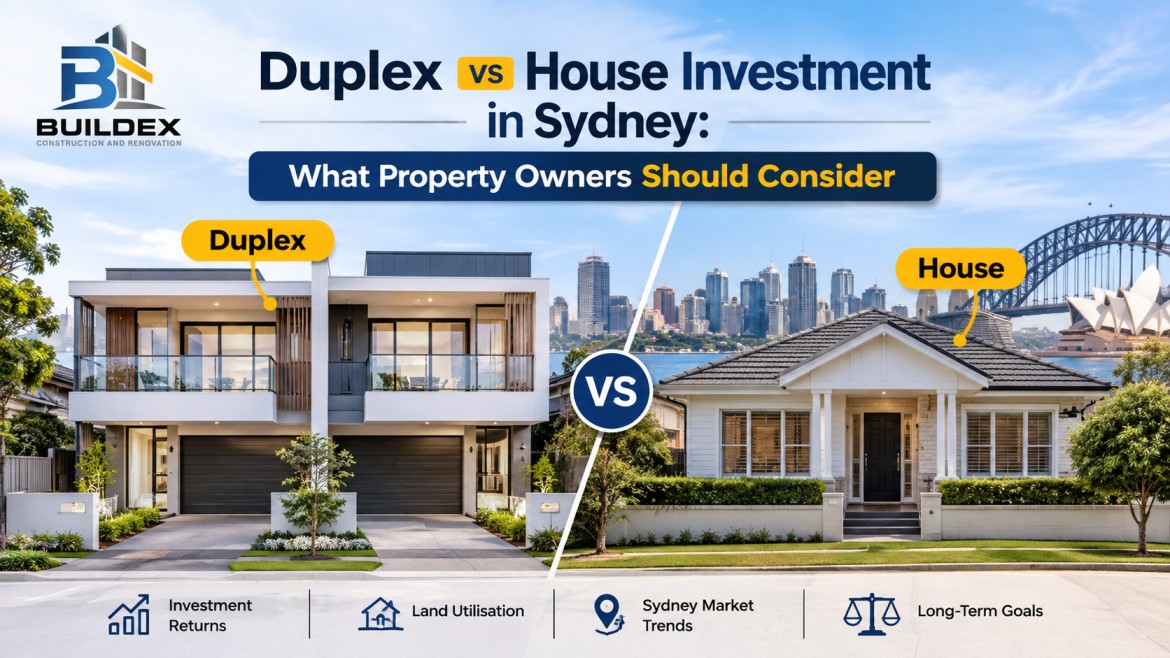
You own a house on a decent Sydney block. It rents out fine, but the return feels thin. A friend mentions they knocked down a similar house, built a duplex and now earn two rents from one block. Should you do the same? Many owners call duplex development builders in Sydney before they have run a single number.
That question sits behind most duplex vs house investment Sydney conversations we have with owners. The honest answer is that a duplex can work very well, but only when the block, the budget and your goals line up. This guide compares both options with real numbers, explains the risks and shows you what to check first.
We also break down Duplex vs house rental yield Sydney figures, because yield is where many investors get the maths wrong.
Sydney has the lowest rental yields of any Australian capital. Cotality data shows Sydney houses earned an average gross yield of about 2.7 percent in mid-2026. On a $1.6 million house, that means roughly $43,000 a year in rent before any costs.
At the same time, planning rules have opened up. Since 1 July 2024, NSW reforms have permitted dual occupancy in most R2 low density residential zones, subject to development consent. In mapped Low and Mid-Rise Housing areas near stations and town centres, state standards allow duplexes on lots from 450 square metres with a 12 metre frontage.
Those two facts together explain the interest. Low house yields push investors to find more income from the same land, and the rules now allow it on more blocks.
The Duplex vs house rental yield Sydney comparison looks simple, but you must compare yield on total cost, not just on the finished value. Here is an illustrative example based on a typical middle-ring Sydney block. Your numbers will differ.
| Item | Keep the existing house | Build a duplex and hold both |
|---|---|---|
| Land and existing house value | $1,600,000 | $1,600,000 |
| Build, approvals and site costs | Nil | About $1,900,000 |
| Total investment | $1,600,000 | About $3,500,000 |
| Weekly rent | About $880 | About $2,100 (two dwellings) |
| Annual rent | About $45,800 | About $109,200 |
| Gross yield on total cost | About 2.9 percent | About 3.1 percent |
| Estimated end value | $1,600,000 | About $3,900,000 |
Two lessons stand out. First, the yield improves, but only modestly. Second, much of the real gain often comes from the value created between total cost and end value, plus depreciation on a new build. A duplex is usually a development and equity play first, and a yield play second.
The duplex development process Sydney projects follow usually runs in seven stages.
Experienced duplex development builders in Sydney guide owners through each stage and flag risks before they become costly.
Knowing how to build a duplex in Sydney profitably starts with buying, or keeping, the right block. Width, slope and drainage matter as much as land size.
Good duplex investment property builders look at the numbers before they look at floor plans. They test whether the end value covers land, build, approvals, holding costs and a profit margin. If it does not, they will tell you to keep the house.
At Buildex Construction, we run a feasibility check on every duplex enquiry before any design starts. One Ryde owner came to us ready to demolish a rented house. The feasibility showed a steep rear fall and no drainage easement, which would have added a costly pump system. We helped the owner negotiate an easement with the downhill neighbour first. Only then did the duplex numbers make sense.
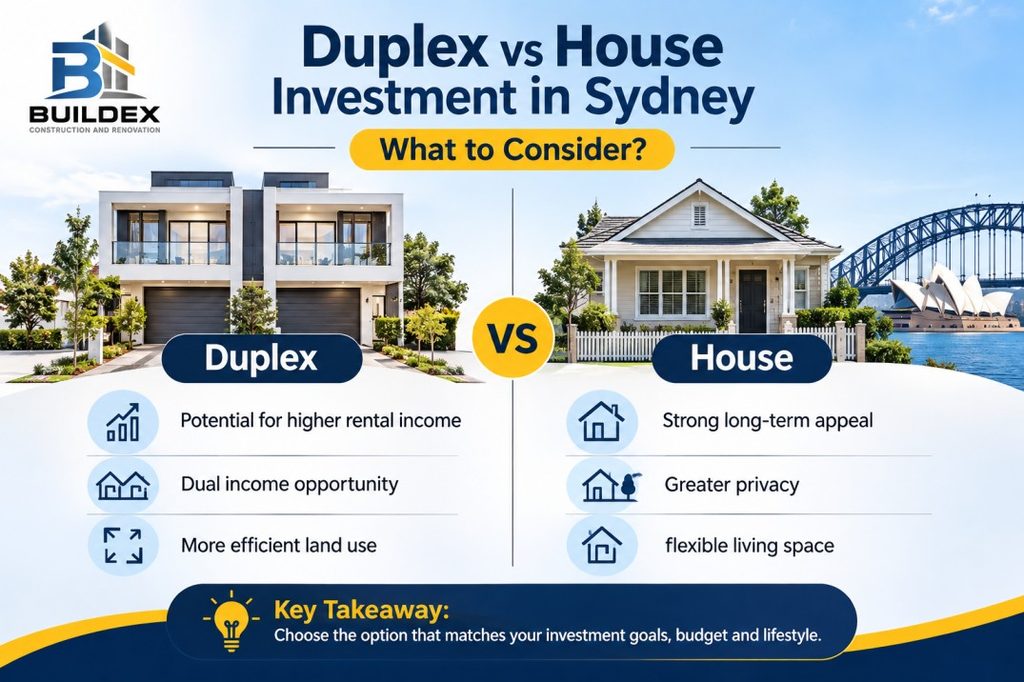
A duplex is not always the smart choice. Keeping the house often makes more sense when:
This is the honest side of the duplex vs house investment Sydney debate. Sometimes the simpler option wins.
A renovated house can also lift rent without the risk of full development. New kitchens, bathrooms and an extra bedroom often improve both rent and value.
A duplex investment property Sydney tenants and buyers want suits owners with patience, equity and a clear exit plan. Common strategies include:
Experienced duplex investment property builders will help you model each strategy with real costs, not optimistic guesses.
The duplex vs house investment Sydney decision depends on your block, your cash flow and your long-term plan. A duplex can create real equity, but the yield gain is often smaller than people expect.
Look closely at Duplex vs house rental yield Sydney figures based on total cost, not just finished value.
Work with duplex development builders in Sydney who test feasibility before design begins.
Choose duplex investment property builders who give honest numbers, even when the answer is to keep the house. If you want a clear feasibility review of your block, the team at Buildex Construction is happy to talk it through.
This article offers general information only. Speak with a licensed financial adviser and accountant about your own situation before you invest.
It can be, but not always. A duplex usually earns more total rent and can create equity through development, but it needs more capital, carries more risk and takes two to three years to complete. A house is simpler and often benefits from steady land value growth. Compare both options using total cost, holding costs, tax and your own timeline before you decide.
Gross yields on a new duplex in Sydney often land around 3 to 4 percent of total project cost, depending on location, design and rents. That is usually higher than an older house on the same block, but the gap may be smaller than expected. Always calculate yield on land plus build plus holding costs, not just on the finished market value.
Most mid-range Sydney duplexes cost $3,000 to $4,500 per square metre to build in 2026, often $1.4 million to $2 million for two dwellings. Demolition, consultants, approvals, services, subdivision and holding costs add significantly on top. Difficult sites, basements and premium finishes push costs higher. Ask builders for an itemised quote and a feasibility review before you commit. Keep a 5 to 10 percent contingency for surprises.
Yes. A duplex always needs approval, either through a Development Application with council or a Complying Development Certificate where your site and design meet every standard. Lot size, width, heritage and flood controls all affect which path you can use. Ask a planner or experienced builder to check your block before you pay for design or demolition. Approval times range from a few weeks to many months.
It depends on your debt, cash flow and goals. Selling one side can repay much of the project loan and leave you with a lower-cost investment. Keeping both gives two rents and more long-term growth, but means higher debt. Tax treatment can differ depending on what you do, so get advice from an accountant before construction starts. Your plan should also suit your lender’s requirements.