

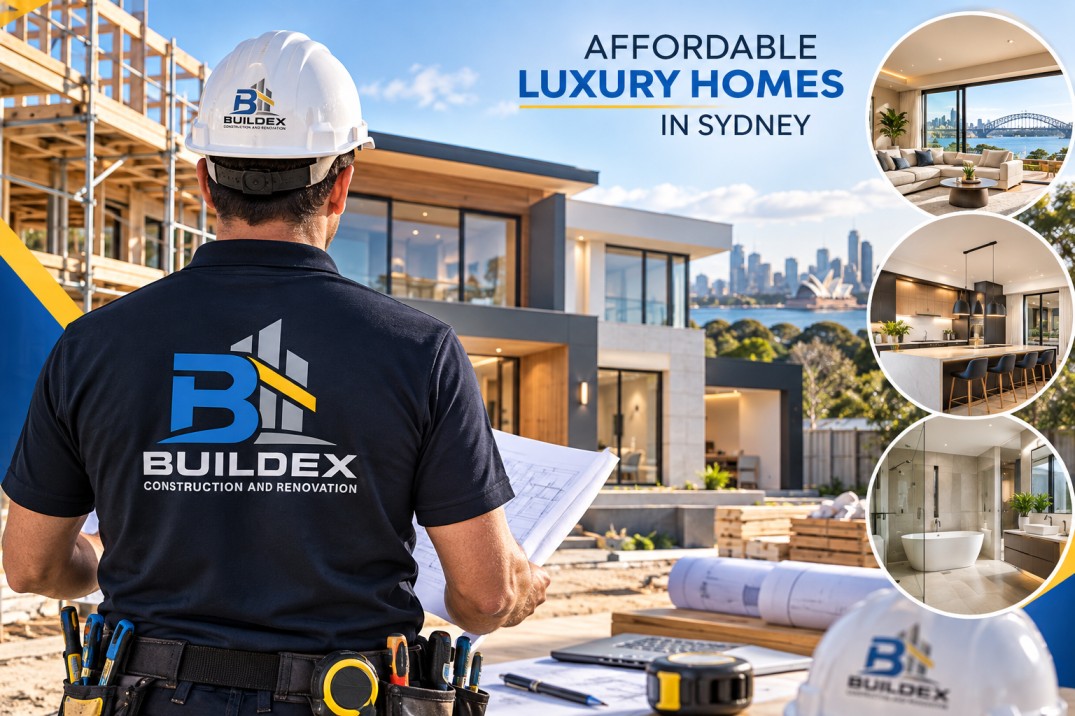
Luxury does not always mean a huge house, imported finishes, and a budget with no ceiling. In Sydney, some of the most appealing homes are much more restrained. They have good proportions, thoughtful layouts, natural light, durable materials, and details that make everyday life easier.
That is the real challenge behind affordable luxury homes Sydney buyers and homeowners are looking for. How do you create a home that feels special without spending money simply for the sake of appearances? The answer usually comes down to making better decisions early, rather than adding expensive features at the end.
Good luxury home design Sydney is not necessarily about having the most expensive item in every room. It is about how the house feels when you move through it.
Think about a kitchen where the cabinetry is simple, but the work triangle is sensible, drawers are positioned where they are useful, and the island does not obstruct movement. Compare that with a more expensive kitchen filled with premium finishes but limited bench space. The first may feel more luxurious because it works better.
The same principle applies throughout the house.
Before choosing finishes, consider:
A well-designed floor plan can add more value to a home than an expensive feature wall.
Building custom homes gives you considerable freedom, but that freedom needs boundaries.
It is easy to start with a reasonable brief and gradually add extras. A larger kitchen island leads to upgraded stone. Then come premium appliances, additional cabinetry, feature lighting and custom joinery. None of these decisions seems unreasonable on its own. Together, they can change the budget dramatically.
This is why a clear project brief matters.
Choosing a custom home builder in Sydney should involve more than comparing the headline construction price.
A lower quote can look attractive until you discover what has been excluded. Site costs, design changes, provisional allowances, landscaping, upgraded fittings or specific finishes can all affect the final figure.
Ask for clarity around the quotation.
A useful conversation should cover:
You are not being difficult by asking these questions. You are trying to understand what you are actually buying.
For a major project, also check the builder’s licensing, insurance, relevant registrations and previous work. NSW Fair Trading provides information on building licences, contracts, home building compensation cover and consumer protections. These checks are worth doing before signing rather than after a problem appears.
A common misconception about affordable luxury is that every material needs to be premium.
It does not.
There are places where spending more can make sense, particularly on items that are heavily used or difficult to replace. Flooring, waterproofing, windows, cabinetry hardware and key plumbing fixtures can deserve more attention than decorative features that are easy to change.
For example, a homeowner might choose a restrained tile throughout the main living areas and spend more on quality kitchen cabinetry. Someone else may prefer a simpler kitchen but invest in better glazing because thermal comfort matters more to them.
Neither approach is automatically right.
The important question is: where will the additional money make a difference to daily life?
This is also where experienced builders can help. A good discussion should explain the trade-off rather than simply recommending the most expensive option.
The custom home building process Australia step by step can vary depending on the project, site and approvals, but homeowners should expect several distinct stages.
The early phase normally involves defining the brief, assessing the site, developing the design and establishing a realistic budget. Planning and building approvals then need to be considered before construction begins.
During construction, the project moves through structural work, services, internal finishes and final completion. The exact sequence can differ between projects.
The important point is that budget decisions should not be postponed until construction is underway.
Changing a floor plan after structural work has started can be expensive. Changing a tap or paint colour is usually a different matter.
A useful rule is to make expensive, difficult-to-reverse decisions early and leave flexible cosmetic choices until later where practical.
Luxury becomes more worthwhile when it solves a problem.
Consider a Sydney family with two children. A large formal living room may look impressive, but a well-planned laundry, mudroom storage and durable flooring could have a much greater impact on daily life.
For someone working from home, acoustic separation and natural light around the study may be more valuable than a dramatic entrance.
For another homeowner, a carefully designed outdoor connection may be the priority because weekends are spent entertaining.
This is why there is no universal definition of luxury.
Some features that can genuinely improve comfort include:
These choices may not always photograph as dramatically as marble or oversized chandeliers, but they can make the house feel better every day.
A good custom home design consultation Sydney homeowners should be prepared for is not simply a meeting about colours and finishes.
The useful questions are often more basic.
Where does the afternoon sun hit? Which rooms need privacy? Where will furniture go? How will the family use the kitchen? Is there enough storage? Could a future bedroom or bathroom be needed? What parts of the design are likely to create unnecessary construction complexity?
Bring your lifestyle into the conversation.
If you rarely use a formal dining room, do not create one simply because it appears in other luxury homes. If you work from home every day, give the workspace proper consideration.
A custom house should be customised around the people living in it.
When learning How to Choose the Right Builder in Sydney, look beyond photographs.
A portfolio can show you what a builder has completed, but it cannot tell you everything about how projects are managed.
Talk to previous clients where possible. Ask how communication worked when something changed. Find out how variations were handled. Ask whether the builder explained delays clearly.
Also look carefully at the contract and payment arrangements. NSW Government and NSW Fair Trading resources provide guidance for homeowners entering building contracts, including important information about contracts, variations and protections.
A builder who is willing to discuss uncomfortable questions openly is often more useful than one who only talks about beautiful finishes.
If the budget is fixed, resist the temptation to make every room luxurious.
Instead, choose a few areas where you want the extra quality to be obvious.
The kitchen might receive better cabinetry. The main bathroom might get more considered finishes. Large living spaces could receive better glazing and lighting. Bedrooms can remain relatively simple.
Use repetition intelligently too. Selecting the same flooring or a consistent group of finishes across several areas can create a more cohesive look without requiring a different expensive material in every room.
And keep a contingency. Construction rarely unfolds with every measurement, product and site condition behaving exactly as expected.
The best affordable luxury homes Sydney homeowners build are rarely the ones with the longest list of expensive features. They are the homes where the money has been directed with purpose.
Good planning, sensible proportions, quality where it counts, and a builder who communicates clearly can make a substantial difference. Start with how you want the house to work, then decide where extra design and material investment will genuinely improve that experience.
Luxury feels much more convincing when it is practical. If you are planning a new home, consult with Buildex Construction and take the time to define your priorities before committing to the design, finishes or construction budget.
Yes. The key is defining what luxury means for your household. Good planning, useful layouts, durable materials, and selective upgrades can create a premium feel without specifying expensive finishes everywhere.
Not necessarily. A custom design gives you more control over what gets included. However, design complexity, site conditions, structural choices, and material selections can increase costs, so custom does not automatically mean economical.
Start with the fundamentals: site suitability, structure, waterproofing, insulation, windows, functional layouts, services and durable materials. Decorative upgrades can usually be reviewed after these essentials are properly funded.
Look at more than completed photographs. Compare contracts, inclusions, exclusions, experience with similar projects, communication practices, licensing, and how variations are managed. A cheaper initial quote is not necessarily cheaper at completion.
From the beginning. The budget should influence the design rather than being checked only after the drawings are complete. Early conversations allow the design team to identify where money should be spent and where simpler alternatives may work just as well.