

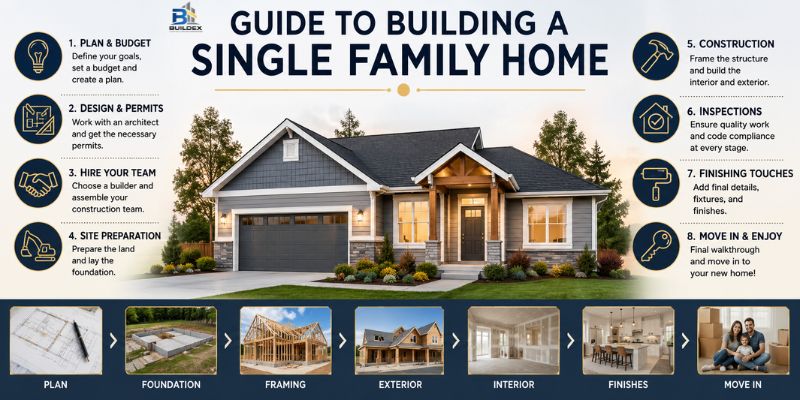
Building a home is one of the biggest investments you’ll ever make. It’s not just about bricks, concrete, and timber—it’s about creating a place where your family will build memories for years to come. Whether you’re planning your first home or upgrading to a larger property, understanding the construction journey can save you time, money, and unnecessary stress.
Choosing the right single family home builders Sydney is one of the most important decisions you’ll make. A knowledgeable builder helps navigate planning approvals, budget management, design decisions, and construction quality while ensuring the finished home suits your lifestyle.
This guide explains everything you need to know about building a Single Family Home, from choosing land and designing your floor plan to avoiding costly mistakes and working with experienced professionals.
A standalone family home offers something apartments and townhouses often cannot—privacy, flexibility, outdoor living, and room to grow.
Sydney homeowners increasingly prefer detached homes because they allow:
Unlike buying an existing property, building new allows every room to reflect your family’s current and future needs.
Every successful project follows a structured process. Knowing each stage helps homeowners make confident decisions.
Before designing your home, evaluate:
For example, a north-facing block allows better natural lighting, improving energy efficiency throughout the year.
Professional site investigations before purchasing land often prevent unexpected engineering costs later.
Finding experienced home builders is more than comparing prices.
Look for builders who provide:
Experienced builders explain each construction stage instead of simply presenting contracts filled with technical language.
Every family lives differently.
Instead of copying display homes, think about how your family actually uses space.
Questions to consider include:
Practical design always outperforms trendy layouts that may become outdated quickly.
Successful house construction starts with realistic financial planning.
Many homeowners underestimate costs beyond the building contract.
These may include:
Keeping a contingency fund helps absorb unexpected expenses without disrupting the project.
Many families choose custom new home construction services because no two households have identical needs.
Custom designs allow homeowners to optimize:
Rather than adjusting your lifestyle to fit a standard design, your home is designed around how you actually live.
Today’s homes should balance comfort with efficiency.
Popular features include:
Large connected kitchen, dining, and living areas encourage family interaction while making entertaining easier.
These spaces can serve as:
Consider:
These features reduce long-term operating costs while improving comfort.
Covered patios and alfresco dining spaces have become essential for Sydney lifestyles.
An attractive floor plan isn’t always practical.
Experienced designers recommend considering:
A beautiful floor plan should improve everyday living rather than simply look impressive on paper.
Every successful project begins long before construction starts.
Detailed planning includes:
Skipping planning often results in delays, budget overruns, and unnecessary redesigns.
Knowing what happens during construction helps homeowners stay informed.
Typical stages include:
Concrete slabs or footings provide structural stability.
Walls, roofing structure, and major supports are installed.
External doors, windows, and roofing secure the home from weather.
This includes:
Builders conduct inspections before handing over the finished property.
Building a home is exciting, but several avoidable mistakes can create unnecessary stress.
Low prices sometimes exclude important items that later become expensive variations.
Always compare:
Changing layouts after framing begins can significantly increase costs.
Spend extra time finalizing plans before construction starts.
Think beyond today’s lifestyle.
Consider:
Planning ahead reduces renovation costs later.
One of the most common homeowner regrets is insufficient storage.
Include:
Sloping blocks, poor soil, and drainage issues can substantially affect construction costs.
Professional site investigations help avoid unpleasant surprises.
Experienced homeowners often recommend:
Seeing active projects provides insight into workmanship and organization.
Don’t hesitate to ask about:
Good builders welcome informed clients.
Document:
Clear documentation prevents misunderstandings.
Higher-quality materials often reduce maintenance costs over decades.
Long-term value usually outweighs short-term savings.
A Sydney family initially planned a standard four-bedroom layout.
During the design stage, they realized both parents worked remotely several days each week.
Instead of building an oversized formal dining room they would rarely use, they redesigned the space into two compact home offices with excellent natural lighting.
The adjustment required minimal additional cost during planning but significantly improved everyday living after moving in.
This illustrates why careful planning often delivers better value than expensive upgrades later.
Experienced new home builders in Sydney for custom homes understand local regulations, supplier networks, and construction challenges.
They typically assist with:
Working with experienced professionals helps reduce delays and improves project outcomes.
Many people assume custom homes are beyond their budget.
However, today’s affordable new home builders Sydney often offer flexible design options that balance quality with cost.
Rather than reducing construction quality, affordability usually comes from:
Careful budgeting from the beginning allows homeowners to prioritize features that provide the greatest long-term value.
Years of residential construction have shown that successful projects usually share several characteristics.
Experienced professionals recommend:
These habits consistently lead to smoother projects and better long-term satisfaction.
Every construction project presents unique challenges.
Experienced builders recognize potential issues before they become expensive problems.
Whether managing difficult site conditions, coordinating trades, or maintaining quality control, practical experience often makes the difference between an average project and an outstanding one.
For homeowners planning a long-term investment, working with professionals who understand Sydney’s building environment provides valuable peace of mind.
Building a Single Family Home is about creating a space that supports your family’s lifestyle for many years. From selecting the right block of land to designing practical living spaces and choosing reliable professionals, every decision contributes to the success of the project.
Working with experienced single family home builders Sydney helps simplify what can otherwise feel like a complex process. By planning carefully, understanding each construction stage, and focusing on long-term quality rather than short-term savings, you’ll be better prepared to build a home that delivers lasting comfort and value.
Whether you’re exploring your first build or planning your forever home, thoughtful preparation and the guidance of trusted professionals like Buildex Construction can make the journey more rewarding. With careful planning, quality craftsmanship, and a clear vision, Buildex Construction helps homeowners create spaces designed for modern family living. When you’re ready to turn your ideas into reality, Buildex Construction can provide the expertise and support needed for a successful home-building experience.
Construction timelines generally range from 8 to 14 months, depending on design complexity, council approvals, weather conditions, site preparation, and material availability. Proper planning before construction begins can significantly reduce delays.
Look for licensing, insurance, transparent contracts, completed projects, client reviews, communication practices, warranty coverage, and experience with homes similar to your planned design. Visiting completed homes and speaking with previous clients can also provide valuable insights.
Not always. While custom homes may involve higher upfront planning costs, they often reduce future renovation expenses and provide better energy efficiency, lower maintenance, and layouts tailored to your lifestyle, creating stronger long-term value.
Create a detailed budget that includes site works, approvals, landscaping, utility connections, and a contingency fund for unexpected costs. Finalize design decisions before construction starts to avoid expensive changes during the build.
Energy-efficient features such as insulation, quality windows, solar panels, and efficient heating and cooling systems reduce utility bills, improve indoor comfort, and increase the long-term value of your property while supporting sustainable living.